Mostrando entradas con la etiqueta Memory Root Light. Mostrar todas las entradas

Memory Root Light at Arte Open Views


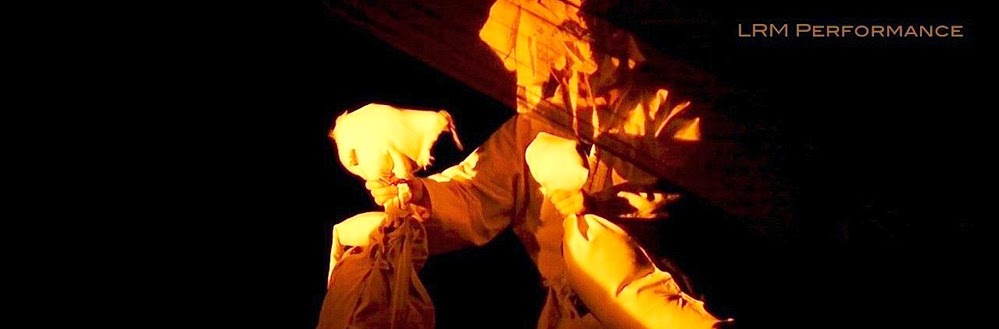
LRM Performance presentará Memory Root Light 
en Arte Open Views como artista invitado.

—Viernes 16 de Mayo. A partir de las 19:00 h. 
Presentación del programa de Arte Open Views en 
Lanau espacio creativo - Madrid. Programa aquí

—Sábado 17 de Mayo, a las 22:00 h:
LRM Performance como artista invitado mostrará Memory Root Light 
en su estudio, exclusivamente para prensa, gestores culturales, 
comisarios e historiadores 
[mediante invitación escribiendo a booking@lrm-info.com ]

FB event: 
https://www.facebook.com/events/638281286266634/


LRM Performance will be guest artists 
presenting and performing at Arte Open Views

— Friday May 16th —19:00h 
Arte Open Views programme presentation 
at LANAU espacio creativo-Madrid (Schedule here)
— Saturday May 17th, —22h : 
 LRM Locus as guest artists will be presenting Memory Root Light 
at their atelier exclusively for press, cultural managers, 
curators and historians by invitation only
— writing to booking@lrm-info.com


Interview with LRM Locus by Arte A Un Click


Arte A Un Click ,
the open-minded wide ranging Art blog writes about and interviews Locus 
Here's the English translation
(You can read the original spanish version here)


Interview with LRM Performance (Locus ) by Arte a un Click


- Such a novel  work as yours must also have artistic references, which ones?

Yes, many and from very different backgrounds: arts, science, daily life... but as Robert Fripp says, "in the creative leap, history waits outside." And in general, the more present your references are, the less original and interesting your work will be, so even if they exist, they must be tamed.  We like Tsai Ming-Liang, Roy Andersson, Colin Stetson, Romeo Castellucci or Dumb Type.

- How you see the field of performance art  in Spain ?
Well, in an ambiguous way: on one hand there is much interest in the subject, which shows a desire to revive, but otherwise there is also much intention of making a cliché of it, of creating scholasticism of a single type of performance art - the 60s kind of eschatological or morbid, minimal (for economic convenience, usually), anecdotally conceptual one - the things we already saw in the last 50 years but more and more captious and decaffeinated. Everyone may do what they want to do with their creative freedom and we respect that, but lately only such kind of performance art is presented,  and of that we are bored already.

- What is it you want to awaken the public to, 
and does what you finally elicit correspond to your expectations when creating the piece ?

We seek to provoke emotions without using concept, idea or narration.  To give to the one who watches it a piece with a lot of formal content and allow him freedom to build the concept himself.  And  from what people say after seeing it, we found out it works.
For us it is important the audience make certain that the piece they are watching is very elaborate and dense, and that we are not manipulating them with preconceptions.  Somehow we are achieving it, many people are surprised by the piece and say they did not know a work like that could be done, and that's very encouraging for us.

- Tell us about your creative process of how the concepts behind the performance are born?

We are tired of so much concept that usually hides the absence of formal work, so we never work from or commence from a previous concept. 
In fact, when creating the piece, we make a big effort to eliminate all that is narrative, descriptive or conceptual.
Our creative process stems from the accumulation of many visual, sound and movement ideas and their combinations and interaction. When we get a result that seems interesting is when we set the structure: what movement will go with what music, what kind of light … We analyze the general structure of the performance thoroughly, its points of tension and relaxation, and prevent the viewer from creating a thread in what is happening in front of him. The concepts and interpretations are created by each viewer, if they will.


- Where and when will the work be presented again?

We will be in Arte Open Views in May, curated by Barbara Bacconi, in collaboration with Federico Zanetti and with the support of the Anzo Foundation. 
We present our work once a month for curators, historians, cultural managers and press in open studios at our atelier in Madrid .

- Your next projects
We are constantly developing new material for the pieces, researching on materials, sounds and actions, many hours we spent on testing, research and development.  We are now working on the new project, provisionally titled "Kowloon", much remains to be done.

LRM Locus, March 2014


LRM Performance - Locus : The new Happening


Aperitive-Arte: LRM performance (the new happening) 

"Speaking about LRM performance is speaking of innovation, creative cravings, seeking for new horizons –not only in the field of performance art  but in music, dance and scenography: an intense Art they manage to combine with great skill.

If I say I am a lucky to know their work (and especially to know them) I fall short.  And that's because they are artists capable of building highly creative associations in your mind, of making you properly journey and if this wasn't enough, to open new performative spectra. Where the interacting (happening) attains a new dimension, one which is projected into time to enrich the experiences of us all, their work. 
A work they share with us, and that is priceless .

2013 has been a busy year for them, they give good account in their blog: Their presence in the latest  Room Art Fair with Stove (curated by VeoArte), into the InMediterraneum Festival or when selected for the Stockholm festival Stoff.  So we had an Art-Aperitif with them in which we talk about "true things",  for which I am forever grateful."

You can read the original article (in spanish) here


Interview with  Locus -LRM performance - 
Diana Pebbles, February 2014

2014 is starting and you find yourselves immersed into your new creation, Kowloon, where as you say the title is just a reference.
You once again conjugate light, sounds, movements... any new search related to your previous works ?

Berta : We are currently into research process, testing materials, preparing music, devising actions and we still do not know how will it all end up. Kowloon is just the working title.

David : Researching is mandatory -otherwise it would be repeating. We work by accumulating ideas in notebooks or videos, year after year and then tacking them together and refining. We are thinking and working on white light –which we have avoided until now because of the usual abuse of it– and the brightness of materials, resonance tubes and prevented movement.

- What does Kowloon mean for you ? Is the result opened up ?

Berta : Kowloon is a district of Hong Kong, a quite large residential area separated from the business area of ​​the city. Lately we have been watching many films from the 80s and 90s' Hong Kong  –directors like Fruit Chan in "The Handover Trilogy" or Kar-Wei Wong in "Fallen Angels" or "Chunking Express". We especially enjoy the story of the Walled City, built up without control in an interstitial way.
It's just a "working title"  –we are considering many other possible titles such as "Onkalo", "Yappari", "Gwei Lou", "Shipbreaking Yard", "Angkor" etc..

David : The name is a mere "handle" for our work is not to be narrative, descriptive or conceptual. That has already been abused too much. We like what Taiwanese film director Tsai Ming-Liang says: only by the absence of a narrative a higher level of consciousness is accessed.

Berta : We make every effort so that the result is non-narrative, we want the viewer to make his or her own interpretation –something they actually do. It is very satisfying to find out each person perceived different things after watching our work.

- Performance art today is hotter than ever (or so we are reading ); do you believe that is because of, as many suggest, a need for real surprise and excitement that is sought after by the public?

David : Well, surprise or emotion is the aim of any art form, right? Now, what is true?... we always mess around with the "authenticity", it is a verbal weapon. In my opinion, for art to exist as such it cannot possibly be "real" : the more you try for it to be real, the poorest result you get  –less "surprise and emotion". However, as Duchamp pointed out, it surely works the other way around: we can turn reality into art. To me that is what confuses many people...

Berta : Maybe performance is preferred now because these days  the audience lock themselves compulsively into digital media. At any time or place we can easily access music, film, video art, documentaries, texts, images, etc.. but in the end it is a plain, flatter medium, even a cold one. 
Perhaps the presence of the live component, to observe and listen to the artistic event which is just taking place, the non-reproducible experience is what attracts them. Although they say it is ephemeral –something you can dispute– live art is much more powerful.
For the public to meet other people to witness the creative act in art centers, auditoriums, theaters or cinemas and share their feelings or impressions is also very important. The digital isolates us, making the city a place where we go home from work without stopping to think. Live Art gathers people and helps avoiding that ultra-liberal social model they constantly try to impose us all.

- Is it necessary for performance art to enter the conventional art circuit to "wake it up"  from its possible lethargy ?

Berta : The conventional circuit's is hackneyed in its contents, and as you say, lethargic. The exhibitions and artists are paralyzed, not daring to take risk, there is much fear to step out of the imposed models.

David : Things have to change, that's for sure. Renew or die. There is a very clear crisis of creativity in the West, I do not know if it generates or is generated by negligence, fear, cowardice and some such things. The performance art is no longer something new, and besides I do not think itself alone may cause a change for the better, it might even make it worse, it may well be used to drain the circuit even more of its content.  It's the people - the citizens - who change things, not a specific art form.

Berta : We see art increasingly harsh and tough with its public in recent years.
David : Yes, the old and obvious criticism of the coldness of 50s modernity is still here, reformulated. In the end postmodernism only left   cynicism and opportunism for us.
Berta : Also, citizens must reclaim conventional circuits, especially public exhibition spaces we all paid for.
I think these days' exposures in unconventional spaces (houses, corners, streets ) are carried out not so much because of aesthetic decision but because there's no other way to do things. They may be interesting as art works, but they sadly reveal a lack of access to other spaces, especially public ones, which are huge and constantly empty.
There is something Machiavellian with artists and daunting to the public at these huge venues set up with public money and absolutely lacking of content.
This is no accident, we must reclaim them for the public and the artist.

- …And if it does... does it run the risk of becoming a mere meaningless  spectacle ?

David : it's really no good for the performance to be fashionable, it is the way to override it by turning it into a stereotype - something it already suffers from fifty years after it appeared. We did put that word in on our name for its distinctly interdisciplinary and open character  –which some would deny– as it generically denotes real-time art. But we did not know it would become the buzzword.
In fact, although it selfishly wants to appear "marginalized", performance art is already into the main circuits, officially accepted and many cling to it like at straws. Anyway, we try not to pay much attention to trends: they are dangerous, distracting, manipulative and subjugating.

Berta : Both modernity and postmodernity ended up being totalitarian and repressive. They impose some aesthetic rules and if you don't follow them they'll accuse you of "doing spectacle" and your acess is denied. And the sense of humor that came with postmodernism ended up laughing at everything and everyone and promoting the idea that  working on a piece is no longer worth it.

David : We try to avoid this current wearisome modernity/postmodernity by making a formally dense and complex work. And getting rid of explicit meanings, anecdotal references, sardonic nihilism and easy simplifications... and the most honest thing we can do is to make the toil  behind the work to be present and noticed by the viewer.

Berta : ... yes, and its meaning will always be brought forward by the viewer.
Performance art, like many other art forms, abused certain resources which became commonplace.

David : Also, it's not a question of "meaning". To me it is more like if it becomes predictable, it will loose its ability to cause that "excitement and surprise". But that is  subjective of course. 

Berta : Maybe a work is interesting if it is noticeable the author learned something,  that there is an effort behind it.

David : Yes, probably what matters in the end it is the "quality" - in the sense of " its unusual qualities" of the work - for the struggle and hours spent on thinking and working on it - That's what is left. The rest is gone with the wind.


- Tell us why are the Open Studios so important for you

Berta : We have been doing Open studios at our workspace for some time now and we are very happy, they have been very helpful to let people know about us. Although it is not the same thing as a public event, we like it because it makes us self-sufficient as the conditions of space and time for the work are set by ourselves. It is the place, materials and sound within which it has been created. And it allows direct contact with those we invite over.

- Do you believe those "other ways of looking at it" by the public and for artists to listen to them is necessary to widen the spectrum? ( If I may, in my opinion you create a new type of Happening which is not so much about physical intervention but about a communicative intervention  – a feedback projected in time with the enrichment of the performative work which acquires many tastes, even by artists themselves )

David : Of course, thanks for pointing that out... that's our intention when we are "non-narrative" and avoid anything conceptual: respect people's creating their own story, concept or interpretation of what they see. And sometimes they have to re-account it every moment. Many people ask us before watching it : what 's it about? and we have to tell them: "well, it's for you to decide". And when they finish viewing it, some get puzzled by the fact that you don't explain it to them. They are surprised of you saying " it is what you think it is " 
This requires an effort, it has a risk, it is not easy. Modernity -and media- have accustomed people to expect from you to "sell" them a story, or a concept –to the point that there may well be nothing behind that story, much in the style of "The Emperor's New Clothes". We seek for the opposite: we give you something very dense, but we do not sell explanations: it is your privilege to create them.

- Finally, what aspects should be improved for a better dissemination of live art ?

David : Well, it occurs to us that the best way would be by means of pluralism, variety and naturalness. It is therefore necessary to work to extend the outreach and pluralize the offer.
Both public and private institutions have always been negligent in this respect : promoting or creating audience ghettos, dividing people, locking them into specialized groups and isolating them. They say each sector is so specialized we must refine the goal, but what they achieve  in the end is both the scope and the quality of what they offer is in many cases dreadfully poor –and how are you going to improve anything that way.

Audiences are flattered, or dreaded, manipulated or despised. We must get rid of those ugly prejudices about audiences by taking the risk of listening to and treating them normally. The audience must also learn to be more tranquile. 
We have seen specialists from all arts despising the public- theirs and others' - and even suggesting certain types of public should not be allowed into art fairs. Such nonsense is leading us astray.

The only hint of pluralism we've seen lately is this idea of ​​including music and "live arts" (without defining it too much, otherwise someone may creep in) into museums. No one can deny it has been a great success and helps to broaden the audience. But that's just too little a thing.

Berta : Also in what's offered, in the artists and works chosen, favored and displayed the spectrum has been greatly impoverished because of this last twenty years' very bad habit of closing on only one option and systematically excluding everything else. There is a political subtext in all this, of course. This prevailing homogeneity is really harmful.
Things must change. But we remain confident because there is new people who are very aware of this and will bring about good things.

LRM Performance ( Locus ) - February 2014

EntrevistArte - Berta Delgado interviewed


EntrevistArte  - Impressions du monde  -Interviews on female artists-

Teresa Miquel interviews Berta Delgado, 
from LRM Performance - Locus,

as a part of the Miradas de Mujeres Festival,
at Cacabelos Antropology Museum  

Original (in spanish) here

• What is your artistic discipline ?   
please explain why you decided to devote yourself to art and what were your beginnings

My family was always interested in contemporary art, my father is a photographer, I learned a lot from him about techniques and procedures just watching him work and my mother is also a very creative person, there was always an environment that fostered curiosity about things at home.
Later on in the Faculty of Fine Arts I studied different disciplines, I was comfortable in drawing and photography, but I was always interested in performing arts : I was into several theater companies, I did courses on body and movement, interpretation and finally I studied scenography as a speciality.
Anyway, it was not until I met David Aladro-Vico (the other half of LRM Performance) tha I combined different disciplines at the same time into our work.
My former work was just plastic in the traditional sense: drawing, photography, or painting... David felt the same, coming from the world of musical composition and being tired of the traditional concert format. We both were interested in breaking those barriers and hence  LRM Performance came about.

• You are part of LRM Performance. How would you explain your work?
Our maxim is to create a fully interdisciplinary work, where all elements (music, visual arts, performing movements...) are at the same level of complexity.
For each work we want its explanation to be done by the viewer.  But as a practical definition we usually put on websites and elsewhere that we are "an interdisciplinary collective –group or company– ignoring the boundaries between artistic disciplines by making abstract or non-narrative visual, auditory, and movement live creations". 

• You achieve impressive stagings. How is your creative process? Where does the idea for ​​each creation comes from?
 Oh, thank you... Actually,  the works are not staged because there is no concept, story or idea to "be staged", so to speak, and that is not our goal. What you see is what it is. We work from the materials - be them visual, sounding or movement - they are the ones that guide us. Sometimes ideas come from things we see or hear, but in the studio these are transformed and tested with other elements. Although we always know what result will we keep –sometimes subconsciously–, we never know where the idea we start from will end up.

• Within LRM you mix up video art, contemporary music, set design, visual arts, performing arts... Is it easier for you to express what you want to by combining different disciplines?
Working in various disciplines is more satisfying, but not easier (actually it may be more difficult, you have to pay attention to more aspects ) but as I say, we seek for no narrative or concept,  nor to express anything concrete but rather provoke an emotion, not defined nor previously conditioned. Certainly it is very convenient to get out of your own discipline to achieve a fresher vision of what you are creating, although it may seem more comfortable to remain enclosed in your academicisms: both the training you received and the exhibition spaces do push you towards that, but we think we must break away from it.

• Do you think performance art is recognized in Spain ?
 in Spain arts are generally not quite valued. Clichés are recognized for social reasons, yes, a lot, but to recognize in the sense of having a fair knowledge and respect, not. We have to make art integrate into people's lives.
About performance art, from our experience the average citizen of our country holds the  preconception that it is an aggressive form of art in which they may even get physically hurt, that it is repetitive, sometimes boring, it is carried out in void spaces and clearly tends to offer only three emotions : disgust, fear or boredom. But mostly they see it as a work with little labour by the artist behind it .
But Performance art is more recognized in Spain than what is believed, it is into the biggest museums, venues and events. It often plays the role of being a misunderstood victim, for their own convenience I think. But it is also true that only one kind of performance art is predominant – that in the '60s vein, which is "raw" actions  in empty spaces. This style is quite appropriate for institutions in Spain: it is inexpensive to produce and convenient for them because it transmits the idea that  there is no possibility of doing things any other way.
From my point of view, here there has been no formal evolution –where you work to incorporate other elements– as it happened since the '70s in some other countries. Performance artists here live with their backs to the history of other artistic disciplines (music, dance and performing arts ). 

• Who makes a work of art, the author creating it or te audiences interpreting it ?
They are the two sides of the same coin, both indispensable, but we believe in the last fifteen years or so the position of the audience has been ignored and subjugated good by offering just a story to interpret (a message or concept) or giving a too simple entertainment ( for example, there is much use of technology as an anecdote) when  what really gives an artistic result is to offer and experience complex emotions. This is a criticism that was already made by the first post-modernity in the early '70s but in our opinion it was ignored for political interest.

• How do you see the current situation of women in art?
I recently saw the figures published by the MAV on the presence of women in the field of contemporary art and found them extremely bad. Firstly it is clear that there is a deep underlying problem in our society: lack education for equality. And second, in the professional milieu : I found it out already at the very faculty of Fine Arts where I saw quite derogatory attitudes of men both peers and teachers towards us.
Unfortunately this is pushing women artists to form their own ghetto within the circuit of contemporary art:  exhibitions are organized for women only, awards are given to women artists... all to maintain a minimum share of our presence in the professional circle.
For this reason all art produced by women are expected to deal in feminism or supposedly women's themes ( pregnancy, femininity, the body used in a sexist way... usually much of cliché ) There is a very distinct iconography.
As a female artist I am not interested in working on that line or aesthetic cliché and I see I am not acounted  for in either side or the other, I do not want to be "tagged" as "female artist". And they are not interested in the fact that I work in equality with a man, we are coming to an absurd situation.
I have no solution to this problem, but although I appreciate the effort made by many activists, it seems a bad sign to me that such ghettos are created, and how at conferences on feminism you can only see women attending. I think we should make the whole society get involved with the problem: not only should women claim for equal rights, but also men should defend them just because they consider it just and because it is a human right like equal rights for all races, beliefs or sexual orientations.

• How important are new technologies and RRSS in the creation and dissemination of your works ?
As creation tools, they are just that, tools – they do not ensure an interesting result–  it depends on what you do with them. But for diffusion, the importance is enormous as very powerful communication instruments. They have their problems too, but allow us to meet people, show our work and exchange information... they are very useful.

• Imagine that you can ask three related to your work or the art in general desires. What would they be?
First, pluralism : chances must be equal for all and ghettos and sectarianism of all kinds, gender, discipline, socioeconomic, etc.  should disappear.
Then, the toil, the hours and effort invested must be respected. If this is not valued, we will continue feeding a bubble that has already burst on us in other areas such as economy.
And finally the most important thing : Stability and continuity. To do a merited piece of work it is absolutely necessary an environment that is not enhancing fear as it is right now, and not letting you down every now and then, destroying possibilities that were created over the years. You do not have to be rich, just stable. It takes a professional and social network that provides confidence and support regularly.

• Can you tell us about future projects?
In LRM we are continually doing investigations, testing materials and devices,  creating sounds, thinking up actions and movements which then who knows where they will end up; there are ideas in the latest work coming from years ago. It is a continuous work in progress and seems to me that the more we do, the more ideas occur to us. We 're preparing a new piece this year, provisionally titled Kowloon. We have many things in the pipeline to try and build : light types, types of sounds and instruments, costumes, prosthetics, shapes and movements... lots to do...

Berta Delgado - February 2014

Anormalmag interview with LRM Locus, by Anna Roig


Anna Roig (aka AnitaKlimt) is an active and corageous artist and culture advocate
working in audiovisual production and collaborating in different Art and Culture magazines
 such as Anormalmag.

She attended Memory Root Light and wanted to ask us some questions
This is her interview with  LRM Locus,  just got out of the oven at Anormalmag


"LRM Locus: What is interesting for us about performance art is its 
openness, its abstraction possibilities and its interdisciplinarity" 

by Anna Roig @annitaKlimt

    Berta Delgado and David Aladro-Vico are the perfect tandem behind LRM Performance -Locus, an interdisciplinary collective creating visual, movement and sound works which transport the viewer into a world of sensations where you are free to imagine and create your own story.  

Where does LRM Performance come from ?

David : I come from writing contemporary music, and felt the need to do something which includes everything I like in addition to music.

Berta : after finishing Fine Arts I wanted to do something different too, so in 2004 we started making short live digital painting plus prepared piano improvisations, interspersed with video art pieces. From there we went on complicating  it with light, movement, installation, prosthesis...

How did performance art appear in your life ?

Berta : My family has always been so fond of contemporary art and within their friend circles there were artists making ​​performances. My brother and I were taken to all kinds of artistic events : exhibitions, concerts, theater. I was eager of the performing arts and was part of several theater companies while studying Fine Arts. Performance art was interesting me because it combined two worlds in which I was into, contemporary art and performing arts.

David : I remember seeing pictures of Fluxus in my parents' art books  when I was young. Years later,  while I was a student in the '90s it struck me that at a conference of Mauricio Kagel he mentioned " gestural music " and ZAJ. By then most people around here used the term happening, usually in a derogatory tone. Then I discovered many later artists like Laurie Anderson or Dumb Type came from there.

Do you believe performance art is an underrated discipline, or is it gradually taking place alongside more established arts such as painting, music, cinema... ?

David : People ask us a lot if it is accepted among other forms of art, but for us it is very clear that  it is accepted, you may find it in all major art centers, theaters or auditoriums  –not in vain 50 years have past since Fluxus and ZAJ. But it is only that particular performance style of the '60s that is accepted .

Berta : For us it is a way forward, not a style, as some artists and critics  pretend (sometimes without even being aware of it ).


What is "Memory Root Light" ? When did the project come about?

David : Memory Root Light is a continuum of abstract scenes seeking to generate unpredictable emotions in the viewer –the title and its meaning is not important, in fact it is a simple anagram. The project originally was an installation to be realised in residence at the Contemporary Art Center in Aomori, Japan, in 2010.

Berta : We decided to go with it, expanding and developing the work, from late 2011 and throughout 2012, with more light designs, video, materials, movement, instruments and sound.


How to prepare for your performance? What will you inspire ?

David : Our working ways are not conceptual, we are not interested in using a concept, nor a story or idea, nor an image or predefined starting point. Where do things come from? simply by living we all accumulate and collect experiences all the time, which we then use, but we are not interested in becoming too much aware of them nor using them to conceptually explain  the work.

Berta : We work quite regularly (in fact, sometimes we have to force ourselves to take days off ) and the material accumulates waiting, you never know when or how it will be used. The assembly process can be lengthy.

In your performance you employ light, music, sound, dance, movement, your own bodies become strange figures... with such mixture of feelings, what do you wish the viewer to perceive during the hour your performance lasts?

David : Just what you say, sentiences... when we prepare the work we make a huge effort for the outcome to have nothing conceptual or narrative. We do not want to tell a story or display a concept. We do not want to "express" something preconceived, we want to generate an emotion, but it is for each individual to have his or her own. Efforts should be made for the work  to be not narrative nor conceptual because sometimes it comes out without being aware of it.

Berta : We work this way because our objective is to allow viewers to elaborate their own interpretation, concept or narrative, if they find it. And although it does not condition us, we love to hear it. It's amazing what the audience is able to interpret, it is always quite different.

Do you believe there is more creative freedom in performance art than  in other artistic disciplines ?

David : What interests us about it is its openness, its possibility of abstraction and interdisciplinarity.  Too bad for those who want to monopolize the word but performance is used in all temporal arts. For us it is a way to escape the inbreeding the arts are suffering which keeps them entrenched.

Berta : Yes, they tried to impose a specific '60s model of performance art  and expel those who do not follow it.  We endeavour diversity.

Do you have plans to bring your performance elsewhere ?

David : Of course, in fact Memory Root Light was first presented in Italy into the Miniere Sonore electroacoustic music festival. Our website is mostly in English  which we use as a lingua franca.

Berta : The reception of this kind of works outside Spain is much better, they are more open. Also, you know, nobody is a prophet in his own land.

What are your projects for the future?

David : We are now into the new piece, working title is Kowloon. We have many things in the pipeline to try out and build : kinds of light, types of sounds and instruments, costumes, prosthetics, shapes and movements.

Berta : It will take time, but we have a lot of patience...

Anormalmag: A commentary on Memory Root Light by prof. Marta Pérez Ibañez


Anormalmag is an amazing alternative magazine looking for the latest trends,
craving for the innovative and adventurous breakthroughs in culture and in tendencies.

They just published an interview with  LRM Locus by Anna Roig
which includes this text by proffesor Marta Pérez Ibañez
on her experience viewing our latest work, Memory Root Light.
Here is the commentary.


LRM Performance and Memory Root Light: 
A unique experience

by Marta Pérez Ibáñez -  Original (en Español) published here  


Interdisciplinarity is one of the highlights of this new century's Art. The artist holds, dominates different disciplines and makes them live together, dialogue, complete and supplement one another, rounding up a polyhedric work of art which often provides multiple views. Combining disciplines, giving useful means for functions different to those intended for in the first time, new possibilities for materials and resources, all this providing intertwining and overlapping elements. Thus, the XXI century art work becomes a sum up  of associated works of art,  ingredients that together have a meaning, but are equally consistent individually, without loosing their identity.

My acquaintance with performance as an artistic discipline was very early, but also quite infrequent in the last two decades. In the late '80s I had the chance to see my first performance in a small space near Saint John the Divine, that strange "Bread and Puppet" Emergency Exit Circus displayed for a diverse group of art students who experienced that kind of work for the first time. The scenery, theater, improvisation and audience interaction automatically reminded me of the Dada soirées at Cabaret Voltaire, mixed with a certain Fluxus violence.

Impossible to remain aside, impossible not to participate, not to experience it. I admit my life was not the same after that New York afternoon. Since then, I attended performances as varied as the artists who made them, from visceral and cathartic exhibitions of public intimacy to abstract stagings without words and without empathy. I confess all of them were in my mind when I responded to the invitation to attend LRM Performance's Memory Root Light , I was guided just by my curiosity, expecting something I did not even know what would it be like. I did not know Berta and David in person, something that made my journey to their studio some kind of blind initiation trip. An Orpheus going through Hades with his eyes closed.

 What I found there was not only warmth in the reception, but into all I expected. We were a small group of art related people but no artists so that our vision of the work would not be conditioned by our own creation. A spectacularly well designed space, consistent, professional. And there started the evolution of the elements making up this interdisciplinary performative work.

Music, light, space, bodies moving slowly, diverse elements like sculptures, like installations interacting with the bodies and modifying the scenery itself.

I could imagine, or allow suggestions, even be carried away by the senses, by elicitation, by symbolism, by associations of images. I could also experience contradictory feelings, take what was happening to my emotional terrain, create my own history, but for me it was not like that.

In my case, I watched and enjoyed it as an artwork is to be seen and enjoyed: leaving room between me and the work which allows me to make the best of it. You could argue that the experience of Memory Root Light was more scenic than artistic, but it would not be quite appropriate. Especially since the most interesting part of the performance itself came afterwards, when talking to the artists and getting to know  the elements conforming the work from the inside.

LRM is as multidisciplinary as the works they realize, and that becomes evident when talking to them. The meticulous care with which the music and light go together matches the delicacy of the installations the performers rely on and the exquisite taste of their movements, so close to dance.
We then understand their success in presenting their projects. Some of us who got together that afternoon –for we had not met before at all– have met again and discussed our attendance at LRM Locus' studio : Also then, for all of us, the experience was unique.

Marta Pérez Ibáñez
Professor of Art market at the Antonio de Nebrija University and the Instituto Nebrija de Competencias Profesionales Institute. 
Art Consultant at ARTEblanco

Memory Root Light critique- Rut de las Heras

After attending our studio presentation on November 25th,
Rut de las Heras Bretín  –worldly wise Art historian, museologist and Art crusader– 
wrote this article expressing her sensations and emotional reactions 
viewing our performance, Memory Root Light. 

Full version, in Spanish, here


" … The lights go out, the notion of space is quickly lost, it is a place you have been into just a few minutes before and you have nothing under control. Required relaxation becomes difficult to achieve under such circumstances, not knowing what, when, how and where will happen whatever will happen. Your body maintains the tension, even more if possible.

Creatures fighting, transforming and fighting against what they are, against what they were. Cavern, lanterns and back to the creature, humans, beings, creatures, I cannot find their meaning, I see a structure and rapidly lose it,  the tension is held, your brain is searching, trying to understand, trying to see its figurativeness, always looking for something known, to give it a form that feels comfortable, a place like somewhere recognizable, a logical sense; a feeling of not understanding anything,  getting to perceive a shape again, a sound, making up a story that gets thwarted once more, more tension ...


You think you already have the space under control, there is a minimum barrier separating you from the action and suddenly that barrier breaks down, you lose track again, you return to insecurity, a fraying thread. What if I quit searching for a sense?  What if I relax and let the light or the lack of it, the sounds or the squealings become part of what I see, hear and feel, just like that?  "


"What if I try not to order it all in my head along a line that may not exist? 
And then it works, the dance begins, the gong, I do not need barking dogs to take refuge in something familiar, creatures do become whatever they are, just shapes, the figurativeness no longer exists and everything gets in place like a collage, and  bearing an overwhelming logic. 
Gloating on visual, auditory pleasure without thinking ... 
loosing the thread, fraying it ... that's what I needed, 
I had no maze to escape from because I was not into any. 


Finishing and being able to sense you lost track of your time, 
out of  time and out of space, as LRM Performance point out, 
"the non-place " and I add : 
"the non-time " and yet a "here and now"

The light is on once again and three-dimensional form comes back, minute hand and second hand, practicalities return, how long is time and space? All calculated to the millimeter and to seconds. How is it made?  accurate programming, perfection is not to be seen, that is perfection, and since you don't see it, it does not exist.

Being sentient is well worth it, but to be able to feel we must allow ourselves to do so. Release yourself, don't linger on what they marked you to, on what you use to. Our mind or feelings are capable of flying farther …where to ?  to a "non-place" outside of what is known.

All I have known before, all that is pre-cooked in my head, a few minutes in the oven and ready,  what if these ingredients cannot combine ?  

What if you have to grow and cook your own? 

Rut de las Heras Bretín, Dec. 26th 2013


PAC (Plataforma de Arte Contemporáneo) review LRM Performance Locus

Photo: LRM Performance Locus

PAC (Plataforma de Arte Contemporáneo)  
is a platform for promoting  knowledge and enjoyment of contemporary Art through the creation, dissemination, exchange, communication and exhibition of Art projects. 

PAC's staff member Art historian Beatriz Mencos was invited to the studio by LRM, and she speaks about the experience on the occasion of witnessing our latest presentation at The Room Art Fair. 
This is the translation (Original here) : 

"LRM Performance / Locus is an artistic group working from interdisciplinarity. Taking performance as a starting point, their work consists of various artistic visual, scenic and musical ingredients that form a unique visual work : Memory Root Light.

On Saturday November 23 they will present one of its fragments, Stove, at the 3rd edition of Room Art Fair. It will take place in Room 321, a space dedicated to the dream curated by VeoArte. A unique opportunity to (re-)discover this piece and witness their "visual enigmas".

Contemplating Memory Root Light is like diving into another dimension. Immersed in absolute darkness, the viewer is invaded by a series of disjointed scenes without narrative intent, in which light, music, sound, color, movement, and dance are combined together creating a mysterious, dream-like, and completely illusory atmosphere.

No voice, no text or anything that can give a space-time reference, or allowing to make sense of this succession of impressions. The aim is not so much to find a meaning, but using intuition, go with what the senses perceive and experience a pure free association feeling.

LRM Performance members employ diverse techniques to carry out their work. The enigmatic objects they use, from their own imagination, are designed and manufactured by themselves using materials such as paper, plastics, gauze, etc.. On the technology aspect, all the sound effects, the timing of lights, music and sounds are the result of hard technical work : installation of lighting equipment, speakers, using specialized software, etc..

This team, consisting of Berta Delgado and David Aladro-Vico plus some other artists' collaboration has been working on this project for years already, even reaching beyond our borders. Now they are presenting it into the 3rd edition of Room Art Fair (see schedule here), looking forward to it and hoping for the audience enjoy themselves and get to escape reality for a few minutes entering another world, the world of Memory root Light." 


PAC (Plataforma de Arte Contemporáneo)
es una plataforma para promover el conocimiento y el disfrute del arte contemporáneo a través de la creación, la difusión, el intercambio, la comunicación y exposición de proyectos de arte.

 Beatriz Mencos, historiadora miembro del staff de PAC fue invitada por LRM al estudio, y habla sobre la experiencia con ocasión de nuestra presentación en The Room Art Fair .

"Una oportunidad única para (re)descubrir esta obra y ser testigo de sus “incógnitas visuales…"

" … Contemplar Memory Root Light es como sumergirse en otra dimensión… la luz, la música, los sonidos, el color, el movimiento, y la danza se combinan entre sí creando un ambiente misterioso, onírico, y completamente ilusorio… "

"… El objetivo no es tanto encontrar un significado, sino utilizar la intuición, dejarse llevar por lo que perciben los sentidos, y experimentar una sensación pura libre de asociación… "


El texto completo aquí


Why on White critique - LRM Locus: "Stove" Room Art Fair, nov. 23 2013


Julio Municio  attended our presentation  at The Room Art Fair 2013 curated by Nuria G / Veo Arte 

In his website Why on White  Municio wrote this about it: 


"LRM Performance presented their latest work in room 321 at the Room Art Fair # 3 - curated by Nuria García from Veo Arte and as usual, it was a huge success. 

Evoking the dreamlike atmosphere of their latest creation Memory Root Light, they built up a fleeting differentiated reality where light and the experimental music designed by David Aladro-Vico  became protagonists. 

A work that goes straight to the senses, to the viewer's most intimate perception of beauty.  
A little gem entitled  'Stove' "  


(original text in spanish here)

LRM Locus at the Room Art Fair - photo: Julio Municio


"LRM Performance construyeron una breve realidad diferenciada…Un trabajo que llega directo a los sentidos, a la percepción más intima … Una pequeña joya"
Julio Municio estuvo en Feria de Arte Emergente | ROOM ART FAIR en el espacio de Veo Arte en todas pArtes y nos dedica esta pequeña crítica:

http://whyonwhite.blogspot.com.es/2013/11/presentacion-memory-root-light-en-raf3.html